
| Weight | N/A |
|---|---|
| Dimensions | N/A |
| Variation | Softcover, eBook |
“Sampling is not gambling”. Analytical results forming the basis for decision making in science, technology, industry and society must be relevant, valid and reliable. However, analytical results cannot be detached from the specific conditions under which they originated. Sampling comes to the fore as a critical success factor before analysis, which should only be made on documented representative samples. There is a very long and complex pathway from heterogeneous materials in “lots” such as satchels, bags, drums, vessels, truck loads, railroad cars, shiploads, stockpiles (in the kg–ton range) to the miniscule laboratory aliquot (in the g–µg range), which is what is actually analysed. Exactly how to acquire a documented, representative analytical result across mass-reduction of up to six orders of magnitude of heterogeneous materials is far from a simple materials handling issue. There are specific principles and rules behind representativity. The TOS to the fore!
This book presents the Theory and Practice of Sampling (TOS) starting from level zero in a novel didactic framework without excessive mathematics and statistics. It represents 20 years of teaching experience which has developed into a unique conceptual framework with which the TOS’ six principles and five unit operations can be understood in a unifying manner, enabling the reader to start sampling in a correct fashion right away. The book covers sampling from stationary lots, from moving, dynamic lots (process sampling) and has a vital focus on sampling in the analytical laboratory. It contains a wealth of complementing cases, examples and references (most of which are accessible on-line) meant to inspire and motivate the reader to individual skills-building and further self-study. The book has been assessed and reviewed extensively, see below.
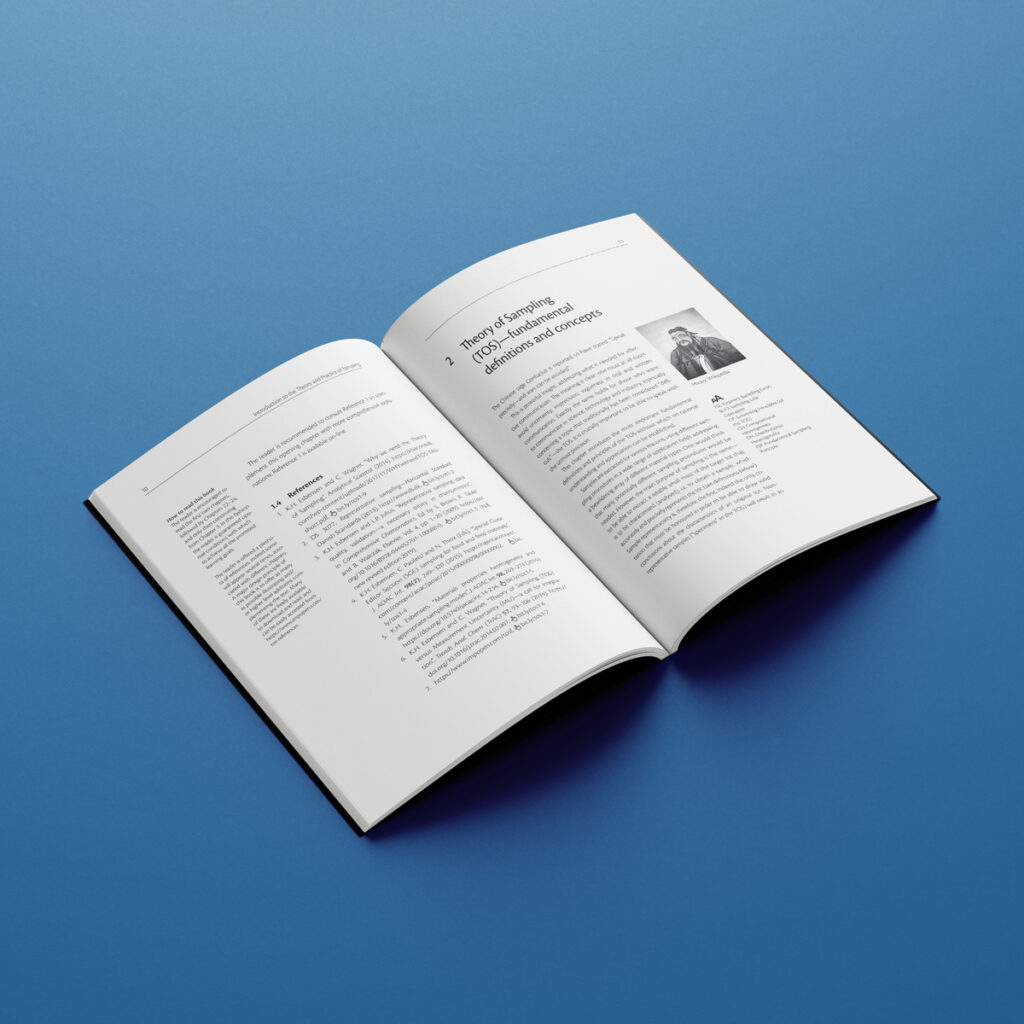 The book will teach you:
- WHY sampling is much more than materials handling
- WHY we need the Theory of Sampling (TOS)
- HETEROGENEITY—the root of all evil
- The Fundamental Sampling Principle—which must never be broken
- HOW TO conduct representative sampling
- The TOS in the laboratory—sample splitting without errors
- The sampling bias—a fatal enemy that can be avoided
- The TOS for sampling of stationary lots and materials
- The TOS for sampling of moving lots and materials—process sampling
- The TOS and business ethics, buyer–seller relationships, vendors’ obligations, societal needs
- The TOS—Pro’s and Con’s
- “The TOS will save you a lot of money”
Reviews
“…the TOS is presented in an easy, comprehensible style that is assessible to everyone…”
“I recommend this book to all newcomers to TOS, but especially also to those who want to go beyond the TOS basics and further explore its numerous literature sidebars and background references. For in depth coverage of the quantitative nature of sampling theory and practice, this is the place to start.”
Gary Ritchie, MS, Principal Consultant, GER COMPLIANCE
“For a reader like me, a newcomer to the field, this new book gives the reader a well-crafted overview of how to get your sampling right from the start—and what it will cost you if you don’t.”
“From the start, the author delivers a book written in a somewhat unorthodox fashion that makes it very easy to read, complete with many detailed examples and case histories. This book may well end up being the standard introduction sourcebook for representative sampling.”
Allan Trebbien. B.Tech Management & Marine Engineering
“…it demonstrates the often large quantitative influences on the final uncertainty of the tiny analytical samples that ultimately are delivered to the laboratory.”
“One of the book’s major advantages is the lavish use of carefully designed didactic diagrams which help the reader to form his/her own understanding of what turns out not to be so “complex” subject-matter as many claim.”
Dr Leo Simon Morf, Deputy Head of Waste Management Department, Canton Zurich, Switzerland
“…one of the book’s strongpoints is that is shows the common nature of proper sampling.”
“…this book should be compulsory in educating not only geology students at universities, but also scientists and technicians in a number of other disciplines, not least analytical chemistry (there is a whole world outside the four walls of the laboratory). All will benefit fundamentally from addressing this book.”
Peter Appel, AppelGlobal
Introduction to the Theory and Practice of Sampling
85,00 €
incl. VAT plus Shipping Costs
This book presents the Theory and Practice of Sampling (TOS) starting from level zero in a novel didactic framework without excessive mathematics and statistics. It represents 20 years of teaching experience which has developed into a unique conceptual framework with which the TOS’ six principles and five unit operations can be understood in a unifying manner, enabling the reader to start sampling in a correct fashion right away. The book covers sampling from stationary lots, from moving, dynamic lots (process sampling) and has a vital focus on sampling in the analytical laboratory. It contains a wealth of complementing cases, examples and references (most of which are accessible on-line), meant to inspire and motivate the reader to individual skills-building and further self-study. The book has been used in numerous courses and trainings.
About the author
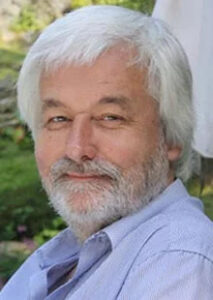 Kim H. Esbensen, PhD, Dr (hon), a geologist/geochemist/data analyst by training, has been working for three decades at the forefront of chemometrics, but since 2000 he has devoted most of his scientific R&D to the theme of representative sampling of heterogeneous materials, processes and systems (Theory of Sampling, TOS), and PAT (Process Analytical Technology). He is a member of several scientific societies, has published over 250 peer-reviewed papers and is the author of a widely used textbook, Multivariate Data Analysis (35,000 copies), published in its 6th edition in 2018. He was the originator and chairman of the taskforce behind the world’s first horizontal (matrix-independent) sampling standard DS 3077 (2013). He is editor of the science magazine TOS forum and of the Sampling Column in Spectroscopy Europe/Asia.